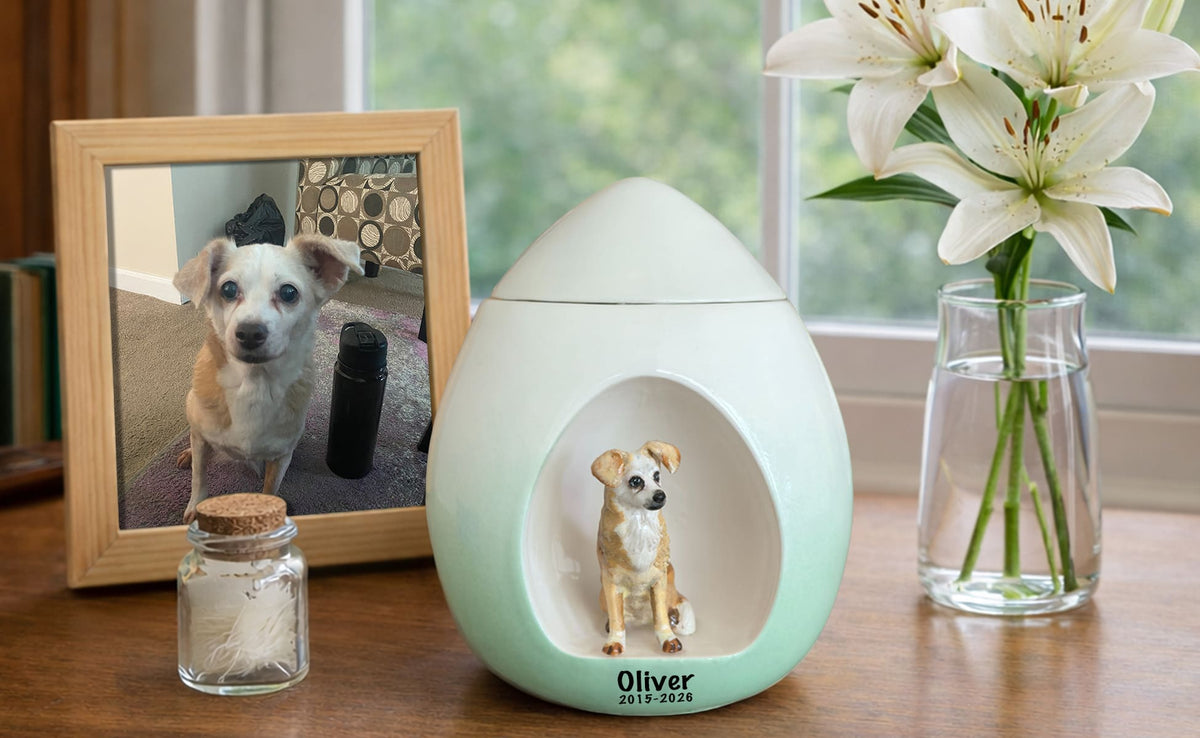
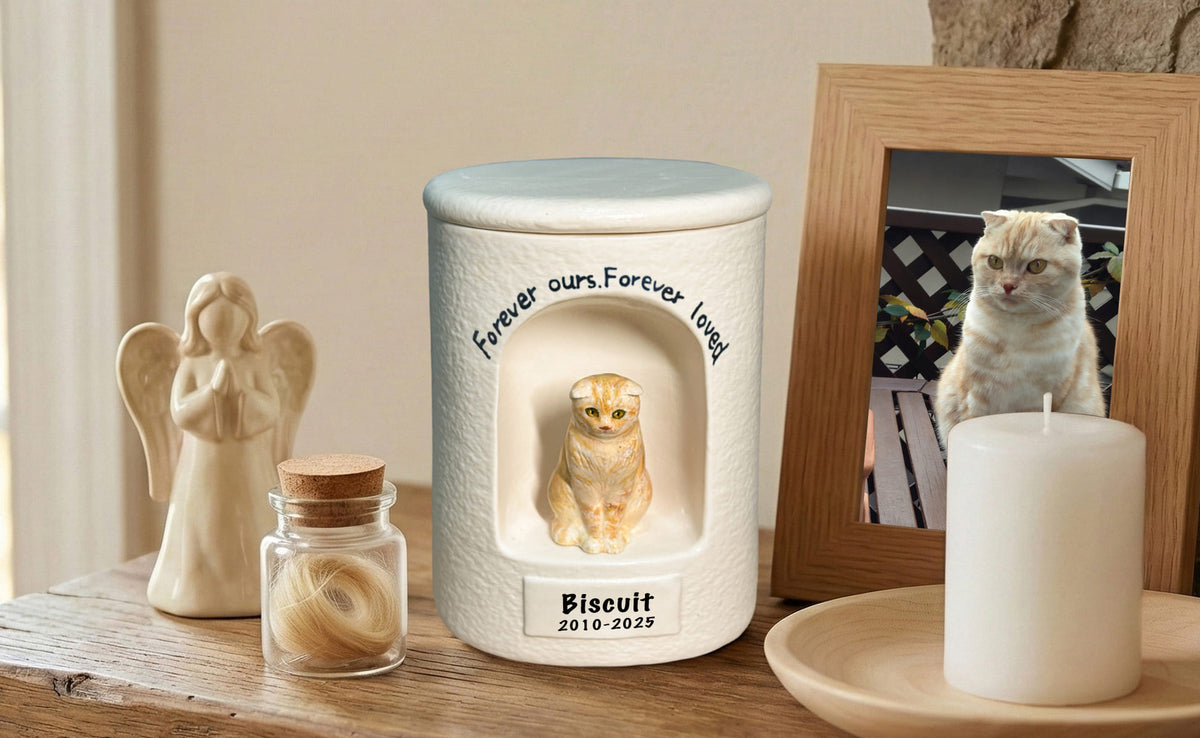
What If You Don’t Have Clear Photos of Your Pet? Can a Custom Memorial Still Be Made?
Not everyone has a perfectly clear photo of their pet. Your favorite picture may have been taken years ago on an old phone, captured in low light, or snapped just as they turned away.
If you are considering a custom pet memorial, it is natural to wonder: Is my photo good enough?
Often, an imperfect photo can still provide useful information. What matters is whether your references show enough of the features you want the memorial to reflect.
Quick Answer
In many cases, old or slightly blurry photos can still be used as references for a custom pet memorial. What can be recreated depends on the details visible in the images, the available angles, and the design you choose.
The most helpful references show a combination of:
- Face shape and muzzle proportions
- Ear shape and position
- Coat colors and distinctive markings
- Body proportions
- A familiar posture or expression
If important features are unclear, ask for a photo review before ordering a detailed likeness. Several imperfect images may provide more useful information together than one photo alone.
What Makes a Photo Helpful?
A photo does not need perfect lighting or composition to be useful. For a sculpted memorial, recognizable shapes, proportions, and markings matter more than how polished the picture looks.
- Face shape: Front-facing and three-quarter views can help show muzzle length, face width, eye placement, and overall proportions.
- Ears: Look for photos showing their natural shape and position, especially if one ear folded differently from the other.
- Coat colors and markings: A white chest, a patch around one eye, differently colored paws, or a distinctive tail can be important reference details.
- Body proportions: Full-body and side views can help explain their build and the relationship between the head, body, legs, and tail.
- Familiar posture: A relaxed sitting position, tucked paws, or a slight head tilt may help you choose a pose that feels recognizable.
Different photos can answer different questions. One may show the ears clearly, while another reveals markings that are hidden in the first.
For help choosing a useful set of references, see our guide on how many photos you need for a custom pet urn.

What If the Photos Are Blurry?
A slightly blurry photo may still show larger features such as body shape, ear position, primary coat colors, and broad markings.
It is less reliable for fine details such as small facial spots, subtle eye color, or the exact edges of a fur pattern.
For example, a blurry front-facing photo might help explain the position of the ears, while a clearer side view provides information about the muzzle and body proportions. Neither image needs to provide every detail on its own.
If all available images are heavily blurred, a detailed likeness may be limited. Have the references reviewed before choosing a design, and discuss which features can be represented confidently.
What If I Only Have One Photo?
One photo may be enough for some designs, depending on what it shows. However, it cannot reveal features hidden on the other side of the face or body.
Before deciding that it is your only reference, consider checking:
- Old phones and computers
- Cloud photo libraries
- Family or friends’ photo collections
- Text messages and family group chats
- Social media posts and archives
- Photos from pet sitters or relatives
- Saved video clips
You do not need to find another perfect portrait. An additional image may be useful simply because it shows a missing angle or marking.
If only one image is available, explain which visible details matter most to you and ask what the chosen design can realistically include.

Can Video Screenshots Help?
Yes. A frame from a video may show a profile, posture, or expression that is missing from your photographs.
Choose a moment when your pet is relatively still and use the original video when possible. Export a frame at the highest available quality rather than taking a screenshot of a small playback window.
A video frame may not show fine detail clearly, but it can still serve as a supporting reference.
Should I Edit or Enhance Old Photos First?
Always keep and send the original image. If an adjusted version makes a feature easier to see, you can include it as an additional reference.
Useful adjustments may include:
- Slightly increasing brightness to reveal areas in shadow
- Making a modest contrast adjustment
- Providing a closer crop alongside the complete original
- Finding the original file instead of using a compressed copy
Avoid cropping away the ears, paws, tail, or body outline if those features are relevant to the design. Brightness and color adjustments can also change how coat colors appear, so identify which image is the best color reference.
Use caution with AI sharpening, face reconstruction, and heavy filters. These tools can generate details that were not visible in the original photo. If you include an enhanced image, label it clearly and provide the unaltered version as well.
What If Different Photos Show Different Colors?
Lighting and camera settings can make the same coat look different across photographs. Brown fur may appear almost black indoors, while white fur may look cream or yellow under warm lighting.
Tell the artist which image best represents your pet’s usual coloring. A short written description can also help:
Your pet's memory deserves more than a shoebox.
Handcrafted urns, made to honor the bond that never fades.
View Our Urns →- “Her coat was chocolate brown, not black.”
- “His chest was cream rather than bright white.”
- “She was gray with a distinct white patch on her chest.”
- “The indoor photo looks too orange; the outdoor photo is closer.”
Photos taken in soft, neutral daylight can be useful color references, although no photograph guarantees an exact color match.
Share the Details That Matter Most
When photos are limited, your descriptions can help identify features that are unclear or easy to overlook.
Useful notes might include:
- “Her left ear folded forward slightly.”
- “His nose was pinkish-brown rather than black.”
- “She had one white back paw; the other was dark.”
- “His chest fur was lighter than the fur on his back.”
- “This is the resting posture I would like the sculpture to reflect.”
For left and right markings, specify whether you mean your pet’s own left and right sides. This helps avoid confusion when looking at a front-facing image.
Separate details you remember clearly from those you are unsure about. Written notes can guide the design, but they do not provide the same visual information as a clear photograph.
For more on realistic expectations, read our guide on how accurate custom pet urns can be.
Which Photos Are Less Reliable as Primary References?
Some images are useful for context but less reliable for judging proportions, colors, or fine details. Try not to rely only on:
- Photos with face-altering or heavy beauty filters
- Close-up wide-angle images that distort proportions
- Pictures taken from a great distance
- Images where the face is hidden by toys, deep shadows, or other objects
- Photos taken under strongly colored lighting
- Repeatedly compressed screenshots
- AI-generated or heavily reconstructed versions of the original
You can still send these images if they show a useful feature. Explain what you want the artist to reference and pair them with unaltered images whenever possible.
| Photo Type | Potentially Useful Information | Limitations to Check |
|---|---|---|
| Clear portrait | Face shape, visible markings, and facial features | Retouching, lighting, and missing side or body views |
| Everyday snapshot | Natural posture, body proportions, and familiar expressions | Motion blur, shadows, and color shifts |
| Video frame | Additional angles, posture, and the position of ears or tail | Lower resolution, motion blur, and compression |
| Old printed photo | Features and markings not shown in newer images | Fading, glare, damage, and the quality of the digital copy |
What Happens After You Send Your Photos?
Your reference images can be reviewed together rather than treated as separate portraits. One may explain the face shape, another the markings, and another the posture you would like to remember.
Before production, clarify:
- Which photos should guide the shape and proportions
- Which image is the preferred color reference
- Which markings or features are especially important
- Which details remain uncertain
- What the selected design can realistically represent
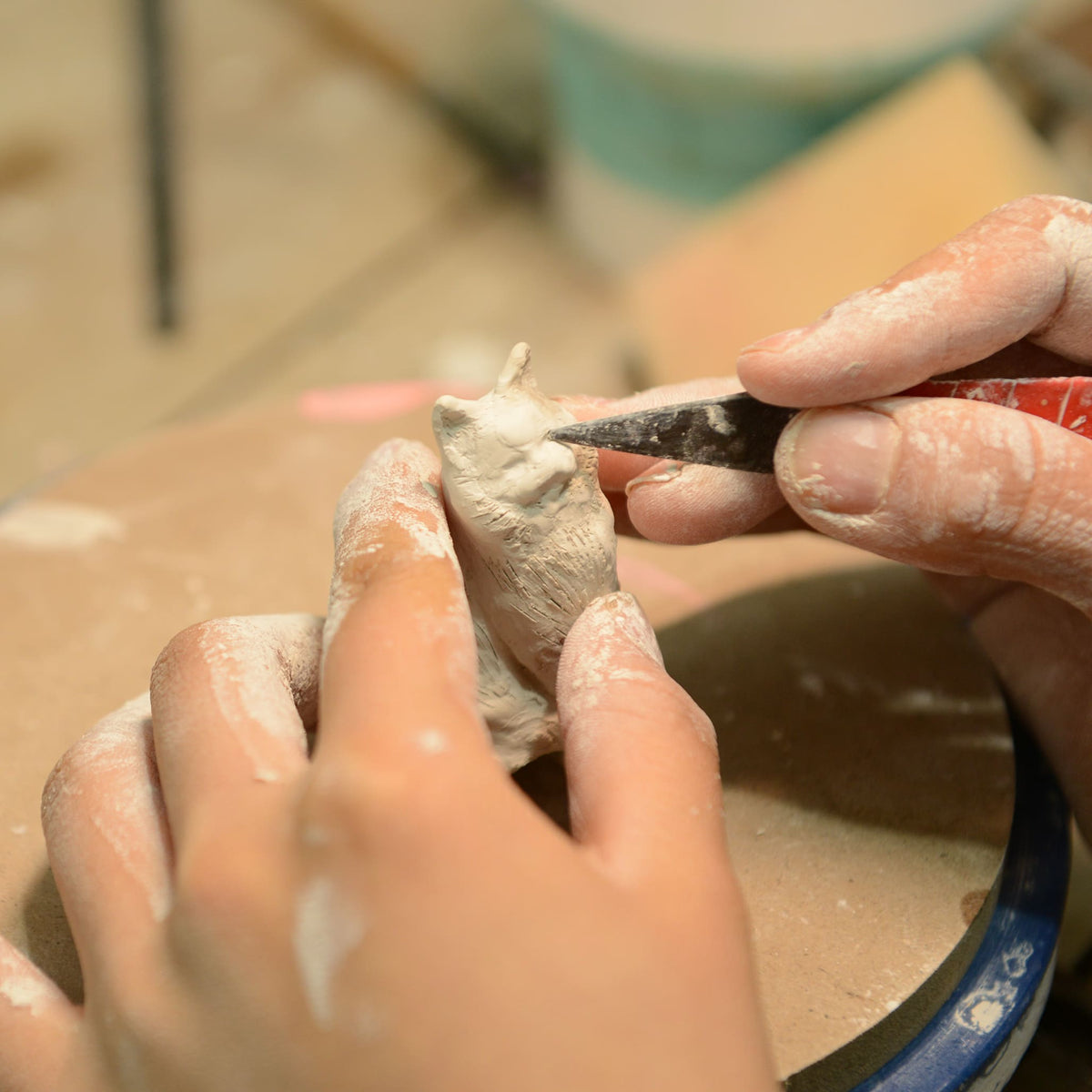
For our custom sculpted memorials, preview images are provided before final finishing so you can review the details. Use this stage to point out differences and confirm any features that were difficult to see in the original references.
For an overview of the process, read what happens after you order a custom pet urn.

What Limited Photos Can—and Cannot—Show
Old or imperfect photos may provide enough information for a recognizable memorial, but they cannot reliably reveal details that are hidden, heavily blurred, or missing from every image.
If a marking or feature is unclear, it should be discussed rather than treated as certain. A handmade sculpture is an interpretation based on the references and details you confirm, not an exact photographic replica.
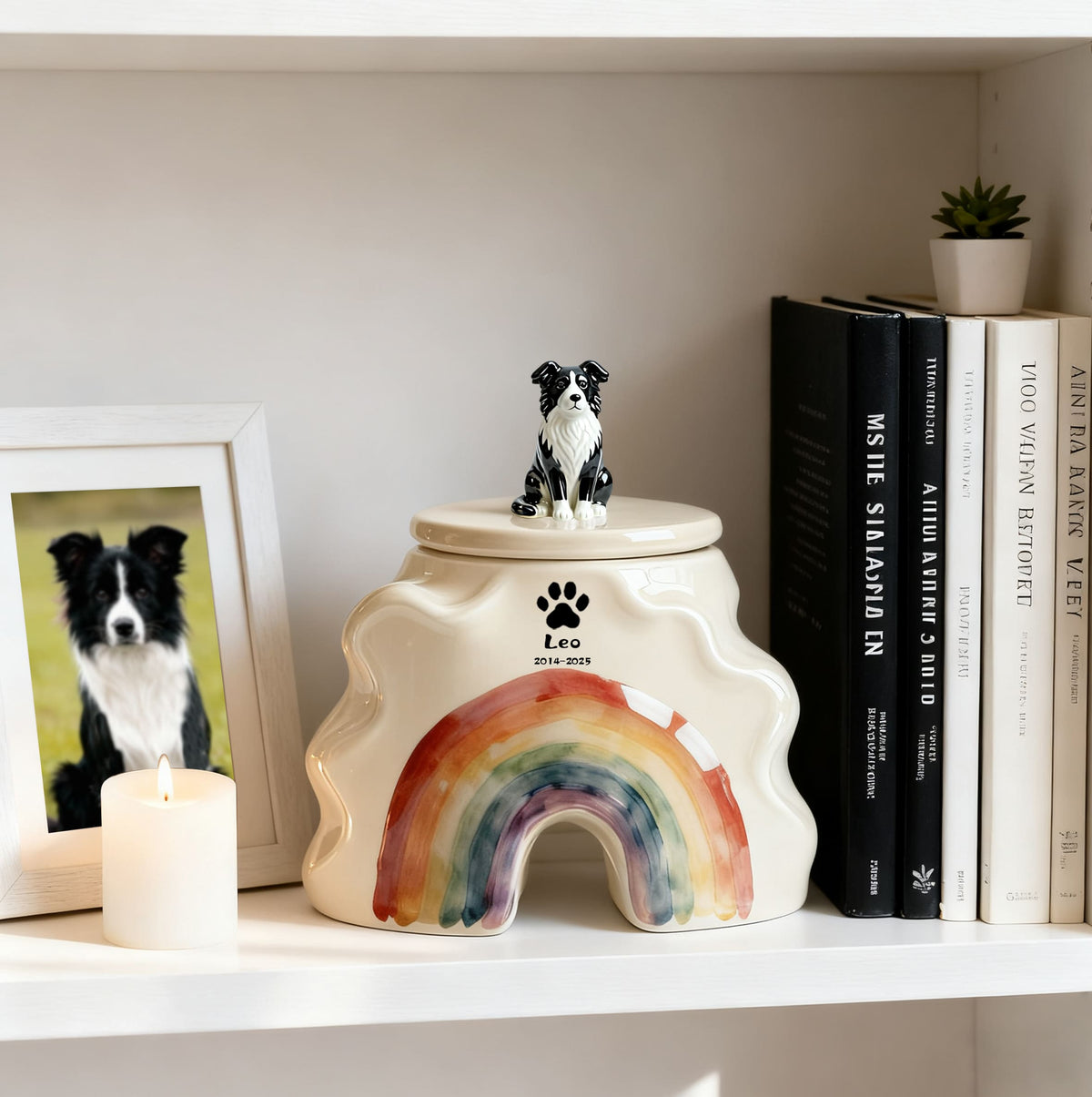
When a highly detailed likeness is not practical, a simpler design may be a better fit. A name, meaningful date, paw print, or familiar pose can still make a memorial personal, depending on the options available for the design.
You can explore these choices in our guide to what makes a pet urn feel personal.
Frequently Asked Questions
Can I use old photos to create a custom pet urn?
Often, yes. Old photos can be useful if they show recognizable features, markings, or posture. Suitability depends on the image quality and the design, so have the references reviewed before ordering a detailed likeness.
Will a blurry pet photo still work?
A slightly blurry image may show larger features such as body shape, ear position, and broad coat markings. Fine facial details may require clearer references or a discussion about what can realistically be recreated.
What if I only have one photo of my pet?
One photo may support some designs, depending on what is visible. It will not show hidden angles or markings, so explain which details matter most and ask whether additional written descriptions or a simpler design would help.
Can I use a screenshot from a video?
Yes, as a supporting reference. Choose the clearest available frame from the original video, preferably when your pet is still. Exporting the frame at its original resolution is preferable to capturing a small playback window.
Should I use an AI tool to sharpen old pet photos?
Send the original photo first. AI enhancement can invent fine details, so an enhanced version should not be the only reference. If you include one, label it as edited and send the unaltered image alongside it.
How many photos should I send?
Send a small selection that shows different useful views rather than many nearly identical images. A front or three-quarter view, a side view, and photos of distinctive markings can each contribute information. If you have fewer images, send what you have for review.
Will the finished memorial look exactly like my pet?
A handmade memorial is not an exact photographic replica. The result depends on the design, the available references, and the details confirmed during review. Clear communication about important features and uncertain details helps set realistic expectations.
A Meaningful Memorial Does Not Require a Perfect Photo
You do not need to dismiss a favorite photograph simply because it is old or imperfect. Start with what it clearly shows, gather any supporting images you can find, and note the details you remember most.
The next step is not to guess what can be recreated, but to have your references reviewed and choose a design that suits them.
If you are considering a photo-based memorial, explore our personalized pet urns and ask about photo suitability before ordering.